If you are registering for a network or retail exemption, you will need to fill out our registration form.
Who needs to register for a retail exemption?
Under the Retail Law, an entity must usually obtain a retailer authorisation in order to sell energy.
However, situations occur where a retailer authorisation is not necessary or appropriate. Examples include when selling energy is not the seller’s core business, the cost of obtaining authorisation outweighs the benefit to customers, or when an insignificant amount of energy is being sold.
We refer to these situations as ‘exempt selling’.
Examples of exempt selling include:
- Retirement villages where an owner or manager buys electricity from an authorised retailer, then ‘on-sells’ it to residents
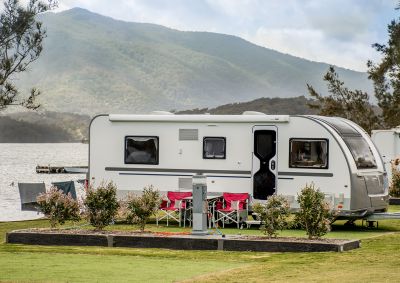
- Caravan parks where an owner or manager buys electricity from an authorised retailer, then ‘on-sells’ it to residents
- Bodies corporate/owners’ corporations who buy electricity from an authorised retailer, then ‘on-sell’ it to tenants or residents
- A person selling energy at no profit or as a community service.
Our Retail Exempt Selling Guideline
Our Retail Exempt Selling Guideline sets out our approach to retail exemptions, including a full list of the types of activities which are exempt from the requirement to hold a retailer authorisation.
The guideline will help you understand:
- whether you need an exemption or an authorisation
- which type of exemption you need – deemed, registrable or individual
- who should hold the exemption
- how to get an exemption
- how we assess individual exemption applications
- the conditions exemption holders must comply with.
Understanding exempt seller obligations
Exempt sellers must comply with a range of obligations when selling energy to customers. This includes family violence obligations that came into effect on 1 January 2026.
We have developed guidance and resources to help exempt sellers understand their obligations and meet their compliance requirements.
Exempt selling fact sheets
Exempt selling to residential customers
This fact sheet explains the requirements and obligations for exempt sellers who on-sell energy to residential customers.
Exempt selling to small business customers
This fact sheet set out the requirements and obligations for exempt sellers who on-sell energy to small business customers.
Resources on family violence obligations
Family violence guidance
This guidance helps exempt sellers to understand their family violence obligations.
Family violence policy template
A template exempt sellers can use to create a family violence policy.
Case studies explaining obligations
Three case studies illustrating how exempt sellers can meet their family violence obligations under the Guideline.
Family violence quick reference guide
A quick checklist to help exempt sellers understand their family violence obligations.
Content note: This training is to inform exempt sellers about their legal obligations in supporting victim-survivors of family violence. No graphic images will be shown. Please note these supports are not available to perpetrators of family violence. If this content raises any concerns for you, please call 1800RESPECT or 1800FullStop for free, confidential and 24/7 support.
[WHAT IS FAMILY VIOLENCE?]
Family violence is when someone in a family or family-like relationship uses violence, threats or control to make another person feel unsafe.
This includes financial control, emotional or psychological harm, physical or sexual abuse, or isolating someone from their community and support networks.
[ACCESS TO ENERGY IN FAMILY VIOLENCE SITUATIONS]
Energy services can be exploited by perpetrators to cause harm in many ways.
Including by limiting access to power, heating and cooling; refusing to help pay for energy bills; or setting up an account without consent to cause financial harm.
[IDENTIFYING CUSTOMERS IMPACTED BY FAMILY VIOLENCE]
Some customers may not say directly that they are impacted by family violence. They may show signs, such as hesitation or anxiety, describe someone else controlling their finances, or have difficulty paying bills.
Listen carefully and respond with empathy.
If you suspect someone is impacted by family violence, use indirect questions to identify whether support may be needed, and then provide it.
[YOUR ROLE]
You play an important role in supporting customers impacted by family violence.
You must: prioritise the customer's safety; protect their personal and account information; and offer help if they are having trouble paying their energy bills.
Always accept what the customer tells you. Never ask for evidence or proof. With their consent, flag their account so they don't need to explain again. Act promptly. Delays can increase risk of serious harm.
Remember, you are not expected to provide crisis support or respond to perpetrators.
Listening and responding appropriately can make a difference to customers impacted by family violence.
Read more about your obligations and what needs to be in your family violence policy at aer.gov.au
Content note: This training is to inform exempt sellers about their legal obligations in supporting victim-survivors of family violence. No graphic images will be shown. Please note these supports are not available to perpetrators of family violence. If this content raises any concerns for you, please call 1800RESPECT or 1800FullStop for free, confidential and 24/7 support.
[INTRODUCTION]
When a customer is impacted by family violence, how you communicate with them and how you support them matters.
[SAFE FORMS OF COMMUNICATION]
You must ask the customer how it is safe to contact them, and only use that method.
This could be a specific phone number, email address, time of day, or through an authorised person.
Not using their preferred safe method of communication, even once, could put the customer at risk of serious harm.
When your customer tells you their preferred safe way to be contacted, record it clearly and follow it every time.
If it is not practical, discuss other safe options.
Remember — communication preferences can change. Check and update them regularly.
Any mistakes such as sending a message to outdated contact information, can lead to serious harm.
[PROTECTING CUSTOMER INFORMATION]
For customers impacted by family violence, sharing any account or personal information without consent can have dangerous consequences.
[FLEXIBLE FINANCIAL SUPPORT]
Customers impacted by family violence may also be experiencing financial hardship.
You must support them by waiving late payment fees and offering flexible payment options.
The customer's debt may be a result of financial impacts of family violence.
It is important to consider the impact of any debt recovery action on the customer's safety and wellbeing.
You must not disconnect a customer if others are responsible for the unpaid bill, if the missed payment is because of financial abuse, or if it will impact the customer's safety.
If there is any doubt, do not disconnect.
[YOUR OBLIGATIONS]
Safe communication and flexible support are essential to meeting your obligations, and to protecting customers impacted by family violence.
Read more about your obligations and what needs to be in your family violence policy at aer.gov.au
Retail exemption usually requires network exemption
If you own, operate or control a privately owned network, you will need an exemption from the requirement to register as a network service provider with the Australian Energy Market Operator (AEMO).
We call this a network exemption and usually if you hold a retail exemption you will also need a network exemption which is also administered by the AER. The AER has a common registration form for both types of exemption (network and retail) to streamline this process.
Our Network Exemptions Guideline contains more information including a full list of the available classes of network exemption.
Retail exemption classes
Our Retail Exempt Selling Guideline outlines three different types of retail exemptions:
If you are eligible for a deemed exemption, you do not need to apply to the AER. Instead, you are ‘deemed’ to fall within a particular class of exemption. However, you still need to abide by the conditions attached to the relevant class of exemption. The guideline sets out these conditions.
If you are eligible for a registrable exemption, you must register your energy selling activities with the AER by completing the exemption registration form.
This type of exemption doesn’t have an approval process. By submitting the form, you are consenting to publishing your exemption on our public register. Please do not include confidential information in your registration as they are not reviewed before publication. If in doubt, contact us first before registering to discuss the information to be published.
It is your responsibility to ensure you complete the registration form correctly and comply with the conditions attached to your exemptions specified in the Retail Exempt Selling Guideline or Network Exemptions Guideline.
If your activities do not fall into one of the other categories above, you may apply to the AER for an individual exemption to cover your activities. Individual exemptions are tailored to specific situations, with conditions attached to the exemption where necessary. We will decide on any appropriate conditions when assessing your application.
To assist applicants with their individual exemption applications, we have developed the checklist below that mirrors the questions asked in Appendix B of our Retail Exempt Selling Guideline. We encourage applicants to complete the checklist and submit it as part of their application alongside a cover letter and any supporting evidence required.
We recommend that you contact us to discuss your specific circumstances if you are considering applying for an individual exemption. If you successfully apply for an individual exemption, you will be included on the AER’s public register.
Exemption conditions
The conditions for retail exemptions are based on the retail customer protections provided under the National Energy Retail Law.
Not all conditions apply to all exemption classes. To confirm the obligations for each class of exemption, please refer to the table in Appendix A-3 of our guideline.
The conditions cover obligations on matters such as
- the provision of information to customers
- joining the approved Ombudsman Scheme
- pricing
- disconnection.
Dispute resolution and Ombudsman scheme membership
Retail and network exemption holders that sell or supply energy to residential customers should join energy ombudsman schemes.
Public register of exemptions
We keep a public register of everyone who has an individual or registrable retail exemption.
This register contains additional information including the location of the exempt seller, the class of exemption, the date the exemption was granted and applicable conditions.